
Heritage and cultural significance of Agra- Introduction.
Agra still remains one of the most popular destinations of India in 2026. The city, set along the banks of the river Yamuna in Uttar Pradesh, embodies the architectural genius of the Mughal period whilst sustaining the palimpsest of cultural, spiritual and local heritage elements. Agra has become more accessible than ever before recently with upgraded infrastructure, better visitor management systems, and new expressway and rail networks while still being one of the key domestic and international travel hubs.
In addition to the world-famous Taj Mahal, Agra has forts, gardens, mausoleums, temples, markets, and cultural centers are all interspersed to tell a story of centuries. Knowing these attractions helps visitors to channelise their exploration of the city and appreciate its larger historical significance through more than a single monument.
Taj Mahal
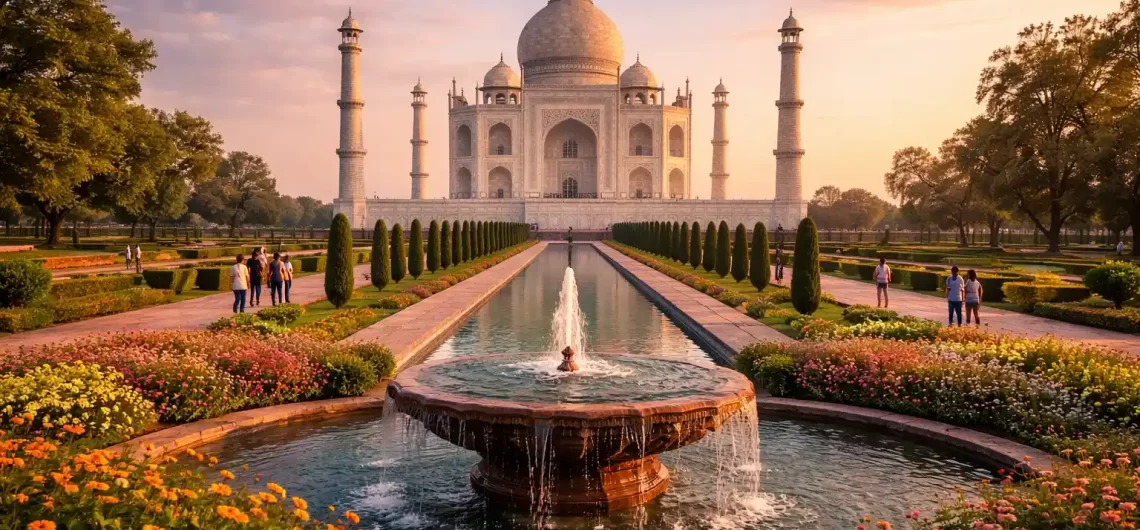
The focus of attention of Agra tourism is still the Taj Mahal. Built between 1632–1653 in memory of Mumtaz Mahal by Emperor Shah Jahan, this iconic white marble mausoleum is globally praised masterpiece of Mughal architecture. Intricately carved symmetry, calligraphy, geometric designs and inlay work in precious stones are the high points of the tomb. By 2026 regulated visitor entry systems and better facilities improve the experience. Visiting during sunrise and sunset still gives the most spectacular view.
Agra Fort
Another UNESCO World Heritage Site, Agra Fort showcases the might of the Mughal Empire itself. Built predominantly from red sandstone, the fort will contain rajmahal, darshak, and mahals during Akbar’s time, and will be updated with majestic halls, audience chambers, and living space by Shah Jahan. Imperial life is mirrored in its structures such as Diwan-i-Am, Diwan-i-Khas and Musamman Burj.
Mehtab Bagh
Mehtab Bagh is the garden view of Taj Mahal across Yamuna River. This balanced landscape perspective is part of the Mughal concept of garden design — and is still attractive to photographers and sunset–goers alike.
Fatehpur Sikri
Situated approximately 40 kilometers from Agra, Fatehpur Sikri was the erstwhile Mughal capital of Emperor Akbar. This city houses Buland Darwaza, Jama Masjid, Panch Mahal, and the tomb of Salim Chishti. The Red sandstone Architecture influenced by Persian, Islamic, and Hindu design.
Itimad-ud-Daulah
Known as the “Baby Taj”, Itimad-ud-Daulah is signifiantly important in Mughal architecture. Composed entirely of white marble with various inlay patterns, this was the precursor to the layout of the Taj Mahal.
Akbar’s Tomb at Sikandra
The Tomb of Akbar embodies the spirit of religious tolerance that was envisioned by the emperor. Located within landscaped gardens, it is a fusion of Hindu, Islamic, and Persian architecture.
Jama Masjid
Among the plethora of fascinating places to visit in Agra, Jama Masjid is one of the largest mosques in India. It was built by Shah Jahan’s girl Jahanara Begum, with incredible vaults and nitty gritty engravings.
Chini Ka Rauza
Home to glazed tile decorations in the style of Middle Eastern Persian tradition, Chini Ka Rauza is situated nearby the tomb. An architectural uniqueness in Agra’s heritage circuit, but not crowded like others attractions.
Mariam’s Tomb
Mariam Tomb, named after Akbar’s wife Mariam-uz-Zamani, is an example of early mughal architectural influence with its serene surroundings.
Ram Bagh
Ram Bagh Ram Bagh is one of the first Mughal gardens built in India. With a historical significance and a quiet atmosphere, it was designed in Persian style.
Anguri Bagh
Anguri Bagh was one of many sectioned off, private gardens that it would have done well as a pass-time to garden as 17th century gardens were often designed as geometric layouts, like the one found within Agra Fort. The principles of Mughal landscape planning are reflected in it.
Taj Museum
Located directly behind the Taj Mahal complex, the Taj Museum holds architectural sketches, calligraphy examples, as well as historical items related to the Taj Mahal’s building.
Wildlife SOS
Wildlife SOS, an elephant and wildlife conservation center based out of Agra. It provides a learning experience to the tourists about the rescue and rehabilitation activities.
Kalakriti Cultural and Convention Center
Cultural and artistic exploration of Mughal heritage unfolds through theatrical performances at Kalakriti.
Mankameshwar Temple
Mankameshwar Temple — Agra is a city known for many things, and one of those things is its temples. Mankameshwar Temple, dedicated to Lord Shiva, reflects the spiritual diversity of Agra. Where devotees still visit.
Soami Bagh Temple
Soami Bagh Temple is known for its beautiful marble carvings. While construction is still in process, it’s a beautifully detailed piece of work.
Sadar Bazaar
You can shop here for marble handicrafts, leather goods, textiles and Agra famous sweet petha in Sadar Bazaar.
Kinari Bazaar
Kinari Bazaar Shows brilliant hues of materials, adornments, and the road life of Agra mirror the customary market culture of the city.
Gyarah Sidi
Gyarah Sidi : An ancient building that was perhaps used for the calculations of the stars.
Dolphin Water Park
Dolphin Water Park, on the other hand, a place for family visitors that provides recreational entertainment aside from historical tourism.
Mughal Heritage Walk
The Mughal Heritage Walk gives glimpses into the part of the Taj Mahal complex and some unexplored facets of the local community, helping one know more about the socio-cultural history of Agra.
Planning a Well-Structured Visit
Visitors can take in the highlights of Agra in just a day or two, depending on personal interests. Its such a darn convenient short trip from Delhi, specially with all the new expressway connectivity this side in 2026! Often, travelers combine visits to the memorials with markets and cultural exhibitions for a more rounded schedule.
Royal Taj Tour: The travel agency based at Agra advocates for punctual travel so that the tourists can save time at the monuments and not face logistic problems. Without a guide, you will likely never get the historical context of what you are seeing or the architectural details.
Overnight Agra City Tour from Delhi is a warranted choice for the traveler leaving from Delhi. You can explore the Taj Mahal and Agra Fort and other heritage sites without rushing in this much time. It might even give travelers a chance to soak in both the sunrise and sunset sides of the spectrum of cultural exchange with an overnight stay included in the package.
Conclusion
In the year 2026 Agra is a town where the pause in history, and architecture, and living tradition lives. Everything — from the majestic Taj Mahal to our hidden gems, colorful bazaars, and all that heritage stuff.
Visiting several attractions can help you learn more about Mughal influence and traditions in the site as a whole. With Advance Planning and Proper Coordination, It Is Possible to Extract the Best of Agra in Terms of Its Architectural Splendor and Cultural Experiences.

Comments